

How To Sell Antique Clocks: Find Buyers, Dealers, Collectors & Appraisers
- Posted on 17th November 2026
- in antique appraisal, Antique Clocks, antique dealer
- by Alan
If you’ve got an old inherited clock, you’re downsizing your collection, or you’re just wondering whether a vintage clock is of any value at all, then one of the first questions you’ll be asking is ‘Where can I sell my antique clock?’
It’s not always as simple as just putting a clock online and finding a buyer. Antique clocks are valued based on age, the maker, condition, design, movement, rarity, and collector demand. A simple clock may have a lot of value in terms of history or decoration, but a big, imposing grandfather clock could be very difficult to sell for a whole host of reasons, including the sheer size and difficulty of moving it, the cost of restoration, and the fact that the market for such clocks may have changed.
This is why owners often go to antique clock dealers, antique clock buyers near me, clock collectors, auction houses, and professional appraisers before they decide what to do.
This guide looks at how to value an old clock, where you can sell your antique clock, what buyers are looking for, how an appraisal is carried out, and how to choose the best option for your clock.
Are Antique Clocks Valuable?
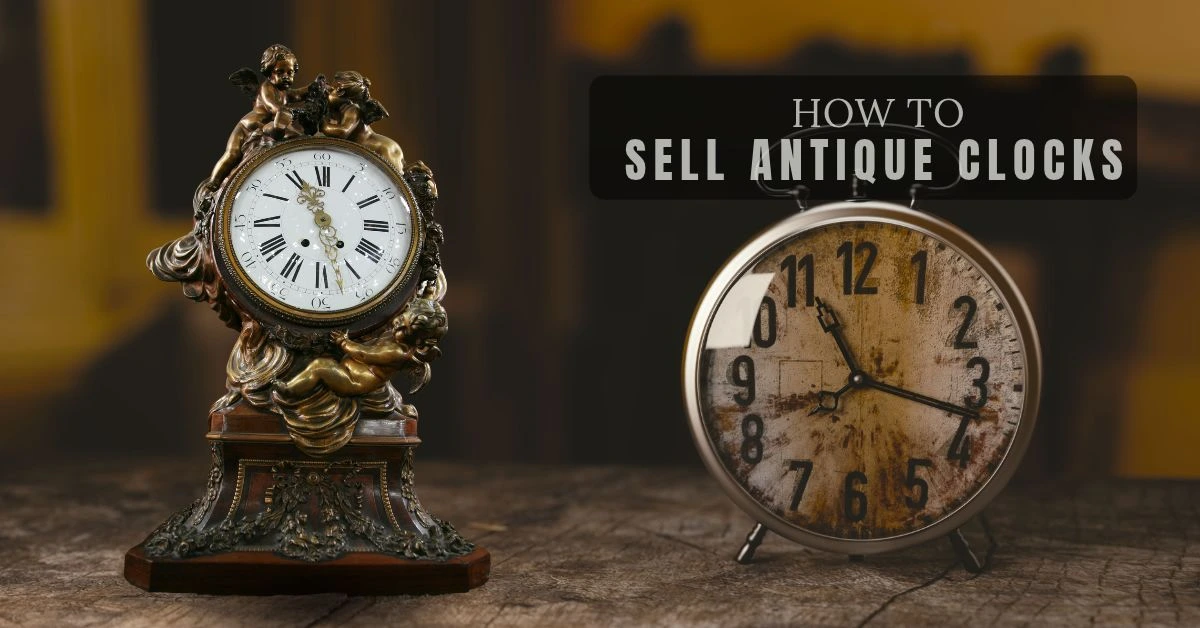
Yes, some antiques are worth a fortune, but age alone doesn’t determine a clock’s value.
Two clocks made at the same time can be quite different in price depending on the maker, movement, case, originality, condition, rarity, and collector demand.
Specialists typically consider several factors when assessing the market value of an antique clock.
Maker or Manufacturer
An antique clock dealer or collector will invariably check the maker first.
Names commonly researched by collectors include:
- Seth Thomas
- Ansonia Clock Company
- New Haven Clock Co.
- Howard Miller
- Ridgeway
- European and English clockmakers
- Independent smaller regional makers
A well-known name may assist with identification, but the maker in itself doesn’t necessarily equate to high value. Age, originality, rarity, and condition are still factors.
For example, if someone asks “are Seth Thomas clocks worth anything?” they should by no means assume that all Seth Thomas clocks are of equal value. Some are extremely collectible; others are quite common.
Age or Period
The date of manufacture will obviously have an effect on historical interest and collector demand.
A very early clock with its original movement, dial, hands, case, and all the other bits and pieces is likely to be more interesting than a later clock that has been heavily altered.
However older doesn’t necessarily mean more valuable. Collector interest is generally in the object as a whole rather than its age.
Originality
The value of an antique clock can depend heavily on whether the original parts are still in the clock.
A specialist may inspect the following to determine whether they appear original to the clock:
- Movement
- Dial
- Hands
- Pendulum
- Weights
- Case
- Glass
- Finials
- Decorative pieces
- Maker’s marks or labels
Many decades of repair work will have led to the use of replacement parts.
Although a collector won’t necessarily turn down a clock simply because it’s been repaired, significant changes can affect both collector interest and market value.
Condition
Another big issue is condition.
A clock with a sound case and complete movement will, of course, be preferred to one of the same general description with missing bits, major case damage, or an incomplete movement.
However, owners should not attempt to restore a clock before seeking the advice of a professional.
Overzealous refinishing, replacing original parts, or even unnecessary modifications can, in some cases, reduce the historical or collector value of an antique clock.
If you’re thinking of selling an important clock, it may be a good idea to have it appraised in its present state first.
Rarity and Collector Demand
Some were made in very large quantities, some in smaller numbers, and some in rather odd versions.
Collectors may pay more attention to:
- Rare examples
- Unusual case styles
- Rare movements
- Early examples
- Established special commissions
- Clocks with special decorative features
- Clocks by major makers
- Clocks in excellent original condition
However, rarity on its own isn’t the answer. There have to be buyers who want the clock.
Provenance and Documentation
If you’ve got any documentation relating to the clock’s provenance, then keep that with the clock.
Useful information may include:
- Original invoices
- Family documents
- Photographs
- Prior appraisals
- Service records
- Auction documentation
- Ownership history
- Correspondence concerning the clock
Strong provenance can at times add to the historical interest and can assist the specialist in identifying an object.
Where can I sell my antique clocks?
There’s no one best place to sell all your antique clocks.
The best way to sell will, of course, vary depending on the type of clock you have, its likely value, condition, size, rarity, and how quickly you’d like to sell it.
These are the principal options.
1. Antique Clock Dealers
A practical starting point would be to look for antique clock dealers or “antique clock dealers near me“.
Specialist dealers will, of course, have clients coming to them looking for specific types of clocks and are in a far better position than the average antique buyer to identify the maker, period, movement, and market.
A dealer may:
- Buy the clock directly.
- Sell it on consignment.
- Suggest an auction house.
- Conduct an informal assessment.
- Refer to a specialist appraiser.
If you’re going the direct sale route, ask the dealer how they arrived at their offer and what similar clocks are currently selling for.
Bear in mind that a dealer’s purchase price will differ significantly from a retail asking price, as the dealer must account for various costs (expenses, risk, restoration, storage, transport, and resale margin).
2. Antique Clock Buyers Near Me
People also search for:
- ‘What’s an old clock worth?’
- “Who buys old clocks in this area?”
- “Clock buyers near me.”
- “Clock buyers in my area.”
If you’ve got a large, delicate, or difficult-to-ship clock, local antique clock buyers can be a great help.
Before you go any further and arrange the sale, ask the buyer whether they have any experience with clocks (i.e., not just general household antiques).
Ask whether they regularly deal with:
- Wall clocks
- Mantel clocks
- Carriage clocks
- Grandfather clocks
- Regulator clocks
- Cuckoo clocks
- Bracket clocks
- Vintage decorative clocks
When you’ve got a specialist in the field, it can make a huge difference in spotting an odd clock.
3. Clock Collectors
Collectors can be quite strong buyers as they’re buying for their own collections rather than for resale.
If you know the type of clock or the maker, then searching with ‘clock collectors near me’, ‘antique clock collectors’ or with established clock collecting organizations may well help you to find out more about your clock.
Collectors may be especially interested in clocks with:
- Unusual movements
- Documented makers
- Uncommon cases
- Original labels
- Unique designs
- Mechanisms of historical interest
- Strong provenance
For private sales, get everything in writing regarding price, payment method, pickup/shipping method, and the clock’s condition.
4. Specialist Auction Houses
If you’ve got a clock that’s rare, valuable, or historically significant, consider a specialist auction house.
Auction houses can put an item before several competing bidders rather than just one buyer.
This may be particularly useful for:
- Rare antique timepieces
- Clocks by important makers
- Unusual grandfather clocks
- Large decorative clocks
- Large collections
- Clocks with notable provenance
If you’re looking at antique clock auctions or clock auction houses, review their previous sales.
Look for companies that have already sold clocks of a similar type.
Ask about:
- Seller’s commission
- Photography fees
- Transportation
- Insurance
- Reserve prices
- Lotting fees
- Payment timing
- Rules for unsold lots
Don’t judge an auction house on its estimate; wherever you can, look at the actual sale prices of comparable objects.
5. Online Marketplaces
If you’re selling antiques online (in this case clocks), you can potentially reach a far wider audience.
Potential benefits may include:
- Reaching buyers beyond your local area
- Having control over the listing
- Providing detailed photographs
- Flexible pricing options
Downsides, of course, include shipping damage, platform fees, returns, buyer disputes, and the general difficulty of accurately describing a clock’s mechanical condition.
A detailed listing should include:
- Manufacturer or maker
- Approximate age
- Dimensions
- Case material
- Dial information
- Movement information
- Visible marks
- Condition
- Known repairs
- Whether the clock is currently running
- Accessories such as keys, pendulums, or weights
Never say an antique clock is working unless you actually know that it is.
Where can I sell my old clocks near me?
Owners of large clocks may find the local sale particularly appealing.
If you search “where to sell old clocks near me,” consider contacting more than one type of business.
Possible local options include:
- Antique clock dealers
- Established antiques dealers
- Estate buyers
- Specialist auctioneers
- Clock collectors
- Consignment galleries
- Estate auction companies
It can be useful to get a second opinion, as specialists will have different customers, inventory, and areas of expertise.
If you’ve got a rare or potentially valuable clock, don’t take a quick offer until you have a better idea of what you actually have.
How To Sell a Grandfather Clock
Grandfather clocks are a particular nightmare in terms of their size and weight, mechanical complexity, and the sheer difficulty of getting them where you want them.
This is why you see all sorts of searches like ‘who buys grandfather clocks near me’, ‘grandfather clock buyers’, ‘sell grandfather clock near me’ and ‘where can I sell my grandfather clock?’
When selling a grandfather clock, get as much information as you can.
Photograph:
- The complete clock
- Dial
- Movement
- Manufacturer’s label
- Interior of the case
- Pendulum
- Weights
- Decorative details
- Any identifying numbers or marks.
Measure the overall height, width, and depth.
If at all possible, work out whether the movement and the case appear to have originated together.
Don’t attempt to disassemble or remove a complicated movement unless you know exactly what you’re doing. Getting it wrong could damage the movement, suspension parts, case, or dial.
Where can I sell a grandfather clock?
Possible sales channels include:
- Specialist clock dealers
- Antiques dealers
- Local collectors
- Estate sale companies
- Specialist auctions
- Regional auction houses
- Online marketplaces
Selling locally is, of course, very convenient as shipping grandfather clocks over long distances can be very expensive.
If the buyer is offering to take it off-site (i.e., pickup), you need to be absolutely clear about who is responsible for taking it down and moving it.
Do you have to appraise an antique clock?
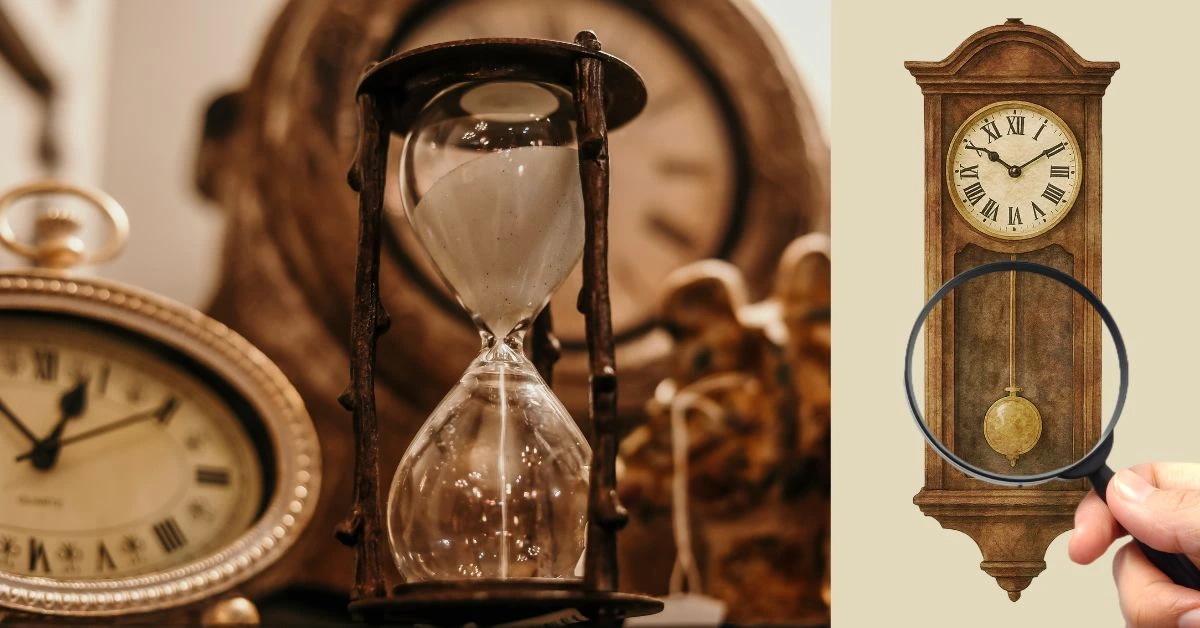
If you’re not sure of your clock’s value, an appraisal or specialist valuation may help.
When you come across an older clock that you’ve inherited or just stumbled upon, you’ll often be looking for an antique clock appraisal, a clock appraiser, or an antique clock appraiser.
An appraisal may be especially useful if:
- The clock appears rare.
- The maker is significant.
- You’ve inherited a collection.
- You need insurance documentation.
- The clock may be estate property.
- You’re looking at a major auction.
- You’re not sure whether to restore it or sell it.
Remember an appraisal and a purchase offer are not the same thing.
Antique Clock Value Explained
“What is this clock worth?” sounds straightforward, but the answer depends on the kind of value you’re after.
Auction Value
What the clock might reasonably be expected to fetch at auction in the current market.
Retail Value
What a specialist dealer would sell an equivalent clock to a customer for.
Dealer Buy Value
The price a dealer would pay to buy the clock in for inventory and resell it.
Insurance or Replacement Value
The amount linked to replacing the object with a like example.
Private Sale Value
What a buyer and a seller might agree to in a private transaction.
These figures needn’t be expected to match one another.
How to Determine Antique Clock Values
You might want to do a bit of research before requesting an appraisal.
Look for similar clocks based on:
- Manufacturer
- Model
- Period
- Case style
- Movement
- Size
- Condition
- Originality
If possible, look at sold prices rather than asking prices.
A seller’s asking price is what they’re hoping to get. The realized sale price is the better indicator of what a buyer actually paid in that particular transaction.
Even so, comparisons need to be made carefully, as two clocks that look the same may differ greatly in originality, condition, rarity, or mechanical completeness.
How to Tell If a Clock Is Antique Before You Sell It
Proper ID is generally the first step to a successful sale. Begin by examining the clock carefully. Look for the manufacturer’s or maker’s name.
Check the:
- Dial
- Movement
- Back plate
- Case
- Paper labels
- Interior doors
- Underside
- Winding area
Maker information may be printed, engraved, stamped, painted, or attached as a label.
Search for Model or Patent Information
Numbers or dates could indicate a model, movement, patent, or production period.
Do not automatically assume that every number is a date.
Write down all markings precisely as they appear.
Photograph the Movement
Write down all markings precisely as they appear.
Take clear photographs without removing unnecessary mechanical parts.
Do Not Over-Clean the Clock
Owners will sometimes go to the trouble of giving an old clock a good clean because they think it’ll fetch a higher price.
That can be a mistake.
Poor cleaning can damage the original finish, labels, patina, gilding, painted surfaces, and delicate decoration.
Before refinishing or restoring an antique clock, get professional advice.
Should you repair an antique clock before you sell it?
Not necessarily.
While some professional clock repairs may be worthwhile, owners should first consider whether they can recover the cost when the clock is sold. A poor restoration of a rare clock can be more damaging than leaving it alone. If mechanical work is necessary, find a repair professional who is familiar with the specific type of clock you own.
Keep a record of all the work carried out and any components that were replaced.
Deciding Between a Dealer, Collector, Auction House, and Online Sale
Each selling option has its merits.
When to Sell to a Dealer
You want the convenience of it and a fairly straightforward transaction. A dealer may be able to inspect the clock, buy it, and arrange pickup fairly quickly.
When to Sell to a Collector
You’ve got a very specific clock indeed, which could be very appealing to someone seeking that particular maker, model, movement, and/or style.
When to Use an Auction House
The clock is unusual, rare, valuable, and will no doubt attract competitive bidding from multiple parties.
When to Sell Online
The clock has wide appeal, photographs well, and is easy to transport. There is no standard answer to the question, “What is the best place to sell antique clocks?”
The right marketplace is the one that’s on the clock.
Questions To Ask an Antique Clock Buyer
Before you sell, ask:
- Are you at all experienced with antiques or vintage clocks?
- How did you determine the clock’s value?
- Are you buying the clock directly or selling it on consignment?
- Who pays for transportation?
- Are there any commissions or any other fees?
- When will payment be made?
- Can I have a written receipt?
- Does restoration affect your offer?
- Would the clock be better off going to auction?
- Do you know who made it and approximately when?
A reputable buyer should be able to explain the transaction in plain English.
Red Flags When Selling Clocks
Be cautious if someone:
- Pressures you into a quick sale
- Does not explain the basis of the offer
- Claims that every old clock is worth a fortune
- Asks for a valuable clock to be sent without clear terms
- Does not provide documentation for a consignment
- Recommends costly restoration before properly identifying the clock
- Cannot explain their experience with antique clocks
For objects that may be significant, it can be worth obtaining a second opinion.
What Information Should You Provide to an Antique Clock Dealer?
The more complete the information you can provide when contacting an antique clock dealer or buyer, the more efficient the evaluation is likely to be.
Include:
- Photographs of the whole clock
- Close-up photographs of the dial
- Movement photographs
- Maker’s marks
- Labels
- Approximate dimensions
- Family history
- Location of the clock
- Known repair work
- Whether the clock is currently running
- Photographs of visible damage
Don’t just send one photo and ask “how much is this worth?”
Good photographs and accurate information allow a specialist to provide a more informed initial opinion.
Frequently Asked Questions About Selling Antique Clocks
Where can I sell my old clocks near me?
Potential buyers include antique clock dealers, collectors, estate buyers, auction houses, antiques dealers, and specialist galleries.
If you’ve got a valuable or rare clock, look for someone with real experience in antique clocks.
Where can I sell my antique clocks locally?
Specialist antique clock dealers, established antiques businesses, regional auction houses, and local clock collectors are good places to start.
Local buyers can be very useful for large clocks, as they can see the clock themselves and may be able to assist with transport.
Are Old Clocks Worth Anything?
Some are value varies enormously. Market value can be affected by:
- Maker
- Age
- Rarity
- Originality
- Movement
- Condition
- Decorative quality
- Provenance
- Collector demand
How much are Seth Thomas clocks worth?
Many Seth Thomas clocks were produced in large numbers, and they vary considerably in collectibility and value.
The specific model, period, case, movement, originality, and condition should be considered before determining value.
Who buys grandfather clocks locally?
Grandfather clocks may be purchased by specialist clock dealers, antique dealers, collectors, auction houses, and estate buyers.
Transportation can be a real pain, so having a properly qualified local buyer on your side can be very useful.
Where Can I Sell My Grandfather Clock?
Possible options include specialist dealers, clock collectors, auctions, consignment shops, estate sale companies, and online marketplaces.
If the clock is of any significance or value, it’s worth having it professionally assessed before deciding how you want to sell it.
Should I Sell My Old Clock on the Internet?
Online marketplaces can give you access to loads of buyers, but shipping can be a nightmare, and getting the mechanical condition right is often difficult.
Specialist dealers or auction houses may be better suited to large, fragile, unusual, or high-value clocks.
Do I need to get my antique clock appraised before selling it?
An appraisal can be worth the money if the maker is important, the clock is rather unusual, it’s potentially a good value, or you need it for an estate/insurance purpose.
For a standard clock, an experienced dealer can often give you enough information to decide whether an appraisal is necessary.
What is my antique clock worth?
To get a proper valuation, you need to know the maker, age, movement, case, originality, condition, rarity, and current market demand.
In most cases, start with good-quality photos and any identifying marks.
What is the best way to sell an antique clock?
The best selling method will depend on the object.
A specialist dealer might be the way to go, a collector may be prepared to pay a lot for a particular model, an auction might bring the pressure of competition to bear on a rare example, and an online marketplace may be the perfect outlet for a more ordinary clock.
The aim is to get the clock into the hands of the audience who will understand and appreciate it.
Selling an Antique Clock? Identify Your Item First
If you’re looking for antique clock buyers near me, trying to find where to sell your old clocks, researching clock collectors, or wondering how much your grandfather clock is worth, identification comes first.
Spend some time documenting the maker, movement, markings, dimensions, condition, and history of the clock.
Look at similar examples, see if you can find any actual auction results, and get a specialist opinion if the clock looks unusual or potentially valuable.
A little careful research can help you avoid underestimating an important object while also setting realistic expectations for today’s market.
An antique clock is more than a decorative item. Its case, movement, dial, maker, and history all tell part of its story.
Once you understand that story, you can decide whether to keep it, restore it, appraise it, or pass it on to the next collector.
Want to Sell an Antique Clock?
If you are thinking about selling an antique, vintage, mantel, wall, or grandfather clock, first collect clear photographs and any maker information or documentation you may have.
An appraiser who specializes in antique clocks can help you identify what you have, determine whether it is worth getting a formal appraisal, and advise you on how best to sell the clock.
For more details, visit oor official website: https://sarasotaantiquebuyers.com/
Tags: antique clocks, Sell Antiques
