
Quoted on the Value of Asian and Silver Antiques: A 2026 Appraisal Guide
- Posted on 14th October 2026
- in antique dealer
- by Alan
Originally published: 2020
Last updated: October 2026
By Alan Amero, Owner, Sarasota Antique Buyers
For more than 20 years, Alan Amero has helped Sarasota and Gulf Coast residents identify, value, and sell Asian antiques, sterling silver, and fine metal objects. As the owner of Southwest Florida’s leading antiques gallery and the region’s largest antiques buyer, he brings extensive expertise to the field. A second-generation antiques dealer from New England, Alan relocated to Sarasota in 1992, introducing a fresh perspective and traditional New England approach to the local antiques scene.
For over twenty years, Alan has established himself as a leading dealer of American and European antiques from the 18th to 20th centuries, regularly supplying shops and auction houses along the East Coast. A frequent exhibitor at the monthly Don Scott Antiques Show in Atlanta, he drew inspiration from this renowned event to open the Antiques Gallery of Sarasota. There, he collaborates with specialty dealers to offer a curated selection of antiques for collectors with diverse tastes.
In 2020, I was quoted in an expert article in Long Live Your Money about the value of commonly owned and inherited antiques. The article discussed Asian antiques, including Asian art and Chinese snuff bottles, as well as sterling silver and other fine metal antiques.
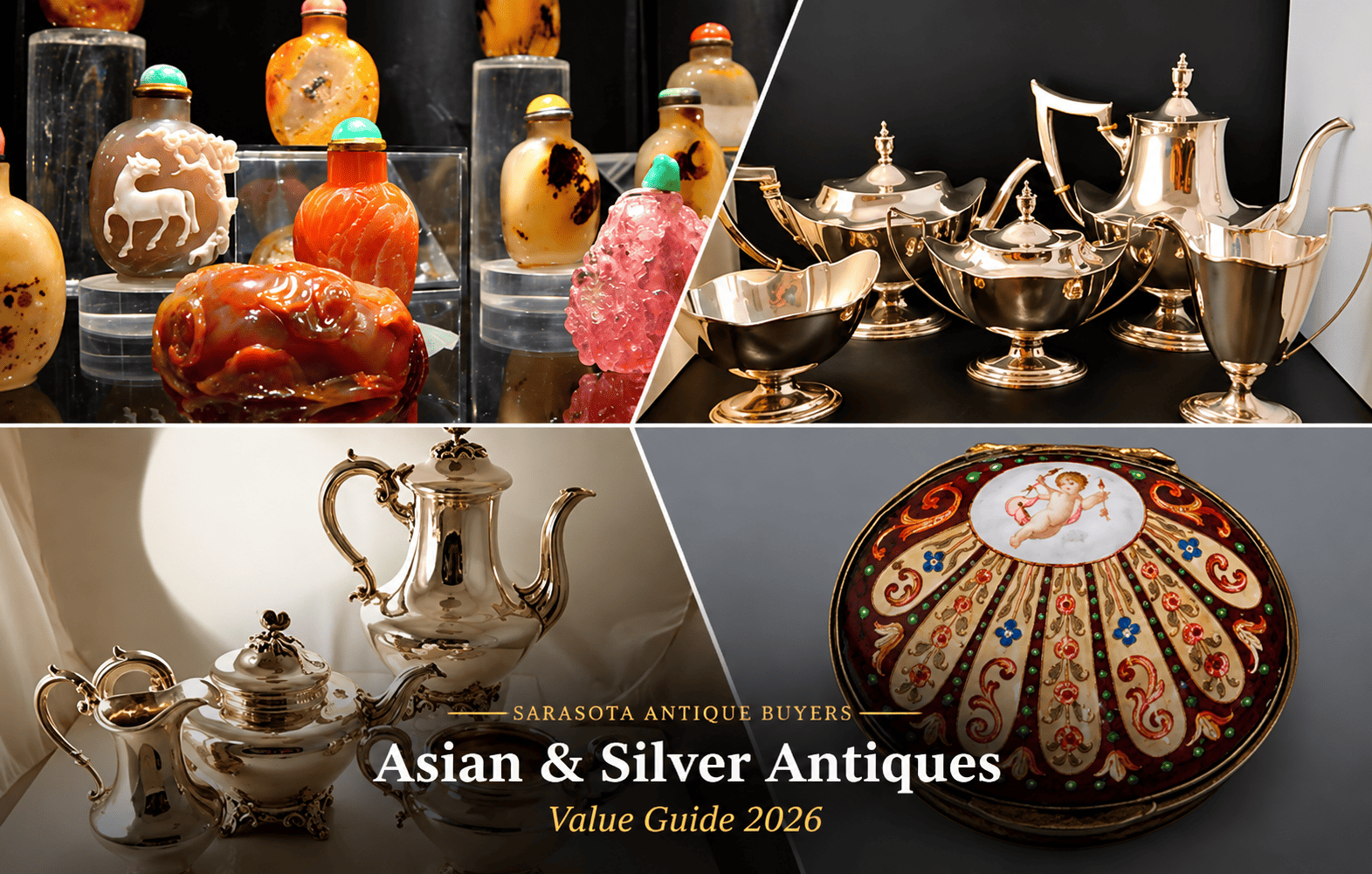
The main advice is still true, but the market has changed. This updated guide takes a closer look at those topics with more practical information for 2026. If you have inherited silver, an old tea set, a snuff bottle, or cloisonné, this guide will help you see what appraisers and buyers really look for.
Why Asian and Silver Antiques Still Matter
Antiques are more than just old things. They reflect taste, trade, craftsmanship, and history. Asian art and silver have two types of value: what they’re made of and what collectors will pay.
Silver always has some value because it can be melted down. Sterling silver is 92.5% pure, and coin silver is about 90%. Even damaged or common silver pieces are worth something for their metal. Asian antiques usually can’t be melted for value, but they can be valuable for their art and culture. Items like Chinese snuff bottles, cloisonné, or signed bronzes can attract collectors worldwide.
But not everything old is valuable. Age by itself doesn’t make something valuable. Value depends on things like authenticity, quality, rarity, condition, history, and what buyers want right now. A mass-produced tourist item from the late 1900s isn’t the same as a well-documented piece from the 1700s. That’s why you should identify your items correctly before selling, insuring, or scrapping them.
Asian Antiques: What Buyers Look For
Asian antiques span a wide range: Chinese porcelain, jade, bronze, lacquer, woodblock prints, netsuke, export silver, cloisonné, champlevé, and Chinese snuff bottles. Each category has its own market, but the same core questions apply.
Authenticity. Is the piece genuinely from the period it appears to represent? Reproductions and later copies are common. A reign mark on the bottom of a vase does not automatically mean the vase was made in that emperor’s reign. Marks were often added later to satisfy export demand.
Artist or maker. A signed or documented piece by a known artist or workshop can be worth many times more than an unattributed example.
Quality. Look at the carving, painting, enameling, casting, and finishing. Crisp details, balanced proportions, and fine materials usually indicate better work.
Condition. Cracks, chips, repairs, restoration, and missing parts reduce value. For snuff bottles, the stopper and spoon matter. For porcelain, hairlines and regilding matter. For cloisonné, lost enamel or crushed wirework matters.
Rarity. Unusual forms, rare colors, imperial connections, or documented exhibition history can elevate value.
Provenance. Auction receipts, family records, appraisals, and photographs help prove ownership history. Provenance can turn a good object into a great one.
Many other categories exist besides snuff bottles. Chinese porcelain can range from common export pieces to rare imperial items worth millions. Jade is valuable if the stone is high quality and the carving is old, but many so-called “jade” pieces are actually treated stone or modern copies. Bronze ritual vessels and sculptures can be important, especially if they have inscriptions or foundry marks. Lacquer, netsuke, and woodblock prints each have their own group of collectors. Export silver, which is Western-style silver made in China, appeals to both Asian and silver collectors. For more tips on specific categories, see our guide to Asian antiques.
Chinese Snuff Bottles: Special Notes
Chinese snuff bottles deserve special attention because they are widely inherited and often misunderstood. They can be made of glass, jade, agate, porcelain, lacquer, amber, bone, or other materials. Inside-painted bottles can be highly collectible if the painting is fine and the artist is known.
Many bottles sold as antiques, however, are modern reproductions. Values range widely. Common modern glass bottles often sell in the low tens of dollars, while a fine inside-painted bottle by a recognized artist can bring several hundred to a few thousand dollars at auction. Rarity, signature, material, and condition drive the difference.
Some materials—ivory, certain corals, and tortoiseshell—are legally restricted. A reputable dealer can help you avoid legal and ethical problems before you sell or ship.
Silver Antiques: Sterling, Coin, and Silverplate
Silver is one of the most commonly inherited antiques. Tea sets, flatware, trays, candlesticks, christening cups, and vanity items turn up in estates everywhere. First, identify what kind of silver you have.
- Sterling silver is usually marked “sterling,” “925,” or with a hallmark. It contains 92.5% silver.
- Coin silver is often marked “coin” or “900” and contains about 90% silver.
- Silverplate has only a thin layer of silver over a base metal. It may look like silver, but it has little or no melt value.
- Weighted silver pieces—candlesticks, teapots, and some bowls—contain a weighted base or filler. The silver content is lower than the total weight suggests.
Beyond metal content, silver value depends on maker, pattern, completeness, and condition. A complete flatware set in a sought-after pattern by a famous maker can be valuable. A single spoon with heavy wear may be worth only its melt value. Monograms can reduce value for some buyers, while historical or famous monograms can increase it; dents, cracks, repairs, and missing pieces all reduce value.
For general market context, common sterling flatware typically trades near the prevailing silver spot price per troy ounce, adjusted for pattern demand and condition. Rare makers and exceptional antique pieces can command multiples of melt value. Complete 19th-century Chinese export silver services by recognized makers can reach the low thousands, while a single damaged silverplate tray may be worth very little.
These are general ranges, not appraisals. For help reading marks, see our silver hallmark guide [INSERT SILVER HALLMARK GUIDE URL] and the external hallmark database at 925-1000.com.
Enameled Metals: Cloisonné and Champlevé
Cloisonné uses metal wires to create compartments filled with enamel. Champlevé cuts the cells into the metal itself. Both require skilled labor.
Value depends on age, artistry, color quality, condition, and maker. A large, flawless piece with deep colors and fine wirework can be worth far more than a small, damaged tourist piece. Common modern cloisonné is modestly priced; fine antique examples can reach the high hundreds or several thousand dollars.
Other Fine Metals
Estates also include gold, bronze, pewter, and brass. Gold retains strong intrinsic value, and signed gold jewelry or objects can be worth much more than scrap. Bronze sculptures by known artists can be valuable, especially with foundry marks and provenance. Pewter and brass are often decorative rather than high-value, but early or rare examples still attract collectors.
Just like with silver, don’t assume that something shiny is valuable or that something tarnished is worthless.
Legal and Ethical Considerations
Some antique materials are restricted. Ivory, certain corals, tortoiseshell, and some rare woods are regulated under CITES and U.S. Fish & Wildlife rules. State laws may add further restrictions. Selling or shipping restricted materials across state lines or internationally can be illegal without proper permits.
Before you sell or ship any item that may contain restricted material, check with the U.S. Fish & Wildlife Service and CITES. A reputable dealer will ask about materials and help you stay compliant.
What Has Changed in the 2026 Market
The antique market is pickier now than it was in 2020. Buyers can check prices online and at global auctions in seconds. Selling average pieces is harder, but truly special items still get good prices.
For Asian art, provenance and authenticity are more important than ever. Collectors are careful about reproductions and legal issues. With silver, the metal’s value sets a minimum price, but decorative and formal sets can be slow to sell unless they’re complete, signed, or rare. Younger buyers usually prefer smaller, practical, or display pieces over big formal sets.
Condition is still key. A perfect item can sell, but a damaged one often won’t.
Locally, coastal estate silver, Asian export pieces, and smaller decorative antiques that fit today’s homes draw steady interest. Large formal dining sets tend to sell slowly unless they’re truly special.
Two Examples From Real Consultations
The “sterling” tea service that wasn’t. A client brought in a full five-piece tea service inherited from a grandparent. The pieces were heavy and beautifully engraved. A magnet test and close inspection of the marks revealed silverplate over copper. Because it was decorative and complete, it still had modest resale value—but nothing close to what the family expected. Had they scrapped it, they would have received nothing for the metal.
The snuff bottle that looked old. A family brought in a carved bottle they believed was 18th century. The carving was crisp and the patina convincing. But the spoon was machine-made, and the stopper threads were modern. It turned out to be a mid-20th-century reproduction. It sold as a decorative object for a modest sum, not as an antique.
Both examples show the same lesson: looks can be deceiving. The real story lies in the marks, how it is made, and what it’s made of.
Practical DIY Appraisal Tips
Before you sell or scrap anything, do a preliminary analysis. These steps will not replace a professional appraisal, but they will help you understand what you have.
- Don’t clean or polish too hard. Heavy polishing can remove patina, wear off plating, and lower value. Instead, dust gently with a soft cloth.
- Keep good records. Take clear photos of the entire item, its marks, any damage, and any labels or receipts.
- Check for marks. Look on the bottom, back, inside, and edges for maker’s marks, hallmarks, country marks, or pattern numbers.
- Try a magnet. Silver and gold aren’t magnetic, so if a magnet sticks, the item is probably made of base metal or steel.
- Pay attention to weight and feel. Sterling silver feels solid and heavy. Silverplate often feels lighter or hollow. Weighted items may seem heavy but contain less silver.
- Look at how the item is made. Check seams, solder joints, hinges, and screws. Rough or sloppy construction usually means it’s a later reproduction.
- Be honest about the condition. Note any chips, cracks, dents, repairs, missing parts, or restoration.
- Look up similar items. Check auction results for what similar pieces have actually sold for, not just the asking prices.
- Know the difference between melt value and antique value. A common, damaged item might only be worth its metal, while a rare signed piece could be worth much more.
- Always get a second opinion. If you’re not sure, talk to a trusted dealer or appraiser before you sell.
Hallmarks: A Simple Guide to Silver and Antique Markings
Common Mistakes Sellers Make
Scrapping weighted silver for melt. Weighted candlesticks and teapots contain far less silver than their total weight suggests. Scrapping them often yields less than selling them as complete objects.
Over-polishing. Aggressive polishing removes patina and plating. Many pieces lose more value than they gain in shine.
Breaking up sets. A complete flatware service is worth more than the sum of its individual pieces. Sell sets as sets whenever possible.
Accepting the first offer. Get at least two opinions before selling anything of potential value.
Ignoring legal restrictions. Selling ivory, coral, or tortoiseshell without checking the rules can create serious legal problems.
Assuming age equals value. Many old objects are common. Many newer objects are valuable. Condition, maker, and rarity matter more than age alone.
How to Find a Reputable Appraiser
Look for an appraiser who belongs to a recognized professional body such as the International Society of Appraisers or the American Society of Appraisers. Ask whether they specialize in Asian art, silver, or fine metals.
A good appraiser will explain the difference between:
- Fair market value: what an item would sell for between a willing buyer and seller.
- Insurance replacement value: what it would cost to replace the item at retail.
- Liquidation value: what you could expect in a quick sale.
Estate, Tax, and Insurance Basics
If you inherited antiques, you may have tax questions. In the United States, inherited property generally receives a stepped-up basis, meaning capital gains are calculated from the value at the date of death rather than the original purchase price. This can substantially reduce tax liability when you later sell.
Estate sales, charitable donations, and insurance claims each follow different rules. Document everything: photographs, receipts, prior appraisals, and correspondence. For insurance, keep an up-to-date appraisal on file and review it every few years, since replacement costs change.
This section is general information, not tax or legal advice. Consult a qualified tax professional or estate attorney for your situation.
Frequently Asked Questions
How do I know if my silver is real?
Look for marks such as “sterling,” “925,” “coin,” or “900.” A magnet test and inspection of wear patterns can help. A professional can verify metal content.
What do hallmarks mean?
Hallmarks identify maker, country, date, and metal purity. They vary by country. Use a hallmark database and consult an expert when marks are unclear.
How much is a silver tea set worth?
It depends on metal content, maker, pattern, completeness, and condition. Common sets may be worth mostly melt value; rare maker sets can be worth substantially more.
Are Chinese snuff bottles valuable?
Some are. Fine inside-painted bottles, rare materials, and signed pieces can be valuable. Many modern reproductions are not.
Should I clean my antiques?
Usually no. Aggressive cleaning can reduce value. Dust gently and consult a professional before polishing.
Do I need an appraisal for insurance?
Yes. Most insurers require a professional appraisal for scheduled valuable items.
Can I sell ivory or tortoiseshell?
Restrictions apply. Check federal and state law before selling or shipping.
Contact Sarasota Antique Buyers
At Sarasota Antique Buyers, I’ve spent years helping people learn about the value and history of Asian and silver antiques. If you have questions or want a second opinion on what something is worth, feel free to reach out. Whether you’re thinking of selling or just want to know more about your items, having the right information can help you avoid costly mistakes.
Related Posts:
