

Henri Matisse Cut-Out Technique Explained: Why His Housekeeper Prepared Canvases
- Posted on 17th April 2026
- in Antique Art
- by Alan
Henri Matisse is celebrated as one of the most influential artists of the 20th century, and his vibrant paper cutouts, known as the Matisse cutouts, remain iconic in modern art. Emerging late in his career, Matisse’s cut outs were groundbreaking and helped define the language of modernism, bridging the transition from traditional painting to abstraction. These works placed Matisse firmly within movements like Fauvism while also aligning his legacy with the bold innovation of mid-century avant-garde art. Learn more about Fauvism and its bold color philosophy in our detailed guide.
But behind the bold colors and joyous shapes of Matisse’s cut-out art was a quiet, essential collaboration: his housekeeper preparing canvases and materials for him. Why was this role so important, and what does it reveal about the process behind Matisse’s revolutionary paper cutouts?
The Transition to Cut-Out Art: Matisse’s Artistic Evolution
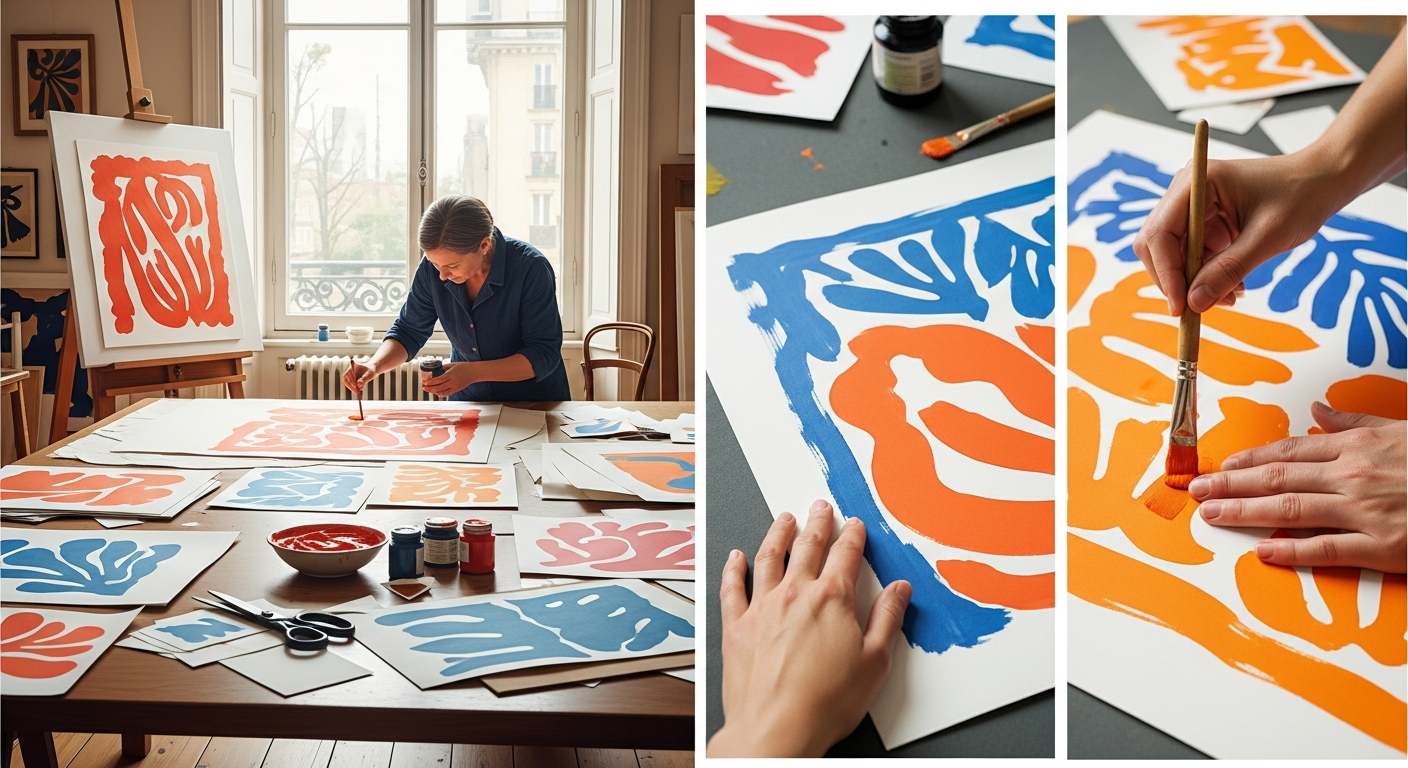
As Matisse aged, his health declined, and he found painting increasingly difficult. Rather than stepping away from art, Henri Matisse embraced a new medium: cut paper art. This innovative technique, often called the Matisse cutout technique or paper cutouts, involved cutting shapes from painted paper and arranging them into vibrant compositions.
The famous Matisse cutouts, or “gouaches découpées,” became some of his most celebrated artworks, such as in “Henri Matisse The Cut Outs.”
The Role of Matisse’s Housekeeper: Preparing the Canvas
During this late period, Matisse’s housekeeper, Lydia Delectorskaya, played a crucial behind-the-scenes role. Lydia, originally from Russia, became not just Matisse’s housekeeper but also his studio manager and trusted collaborator. She would prepare canvases and surfaces, ensuring that Matisse could focus entirely on creating his cut paper art.
But what did this preparation involve, and why was it so important?
1. Preparing the Perfect Surface
Henri Matisse often worked on large canvases or walls, especially for his grand cut-out artworks. Since the cutouts would be pinned, glued, or temporarily arranged before final placement, the surface needed to be smooth, clean, and, in some cases, even colored according to Matisse’s specifications.
His housekeeper helped stretch canvases, prepare backing boards, and ensure the workspace was free of dust and debris. This preparatory work allowed the cutout artist to work quickly and freely, moving shapes around until the composition was just right.
2. Mixing and Painting the Paper
A signature aspect of Matisse’s cut paper art was his use of brightly colored, hand-painted sheets. His housekeeper, alongside studio assistants, would often help mix paints and prepare the paper. This involved coating sheets with gouache, letting them dry, and stacking them so they were easy for Matisse to select and cut.
This step was vital to achieving the saturated, pure colors that define Matisse’s paper cutouts.
3. Organizing the Studio
The creative process behind Henri Matisse’s paper cutouts required an organized environment. His housekeeper ensured the studio was tidy and that materials were within easy reach, from scissors and glue to stacks of painted paper.
This organization gave Matisse the mental clarity and physical space to experiment endlessly with cut-out shapes and patterns.
The Matisse Cut Out Technique: How Did It Work?
Henri Matisse’s cut-out technique was deceptively simple but required precision and preparation. Here’s how the process typically unfolded:
- Painting the Paper: Matisse painted sheets of heavy paper with bright gouache, creating an array of bold colors.
- Cutting the Shapes: Using scissors, Matisse would cut organic, flowing shapes, from leaves to abstract patterns.
- Arranging the Composition: The cutouts were arranged on canvas, board, or walls, adjusted repeatedly for harmony.
- Final Fixing: Once satisfied, the shapes were permanently affixed.
This process led to masterpieces such as “The Snail” and “Blue Nude II.”
What Materials Did Henri Matisse Use?
- Heavyweight paper for cutting
- Artist-grade gouache paints
- Scissors for cutting
- Pins or glue for arranging
- Large canvases or boards
These materials, combined with Matisse’s vision, defined his unique cut-out art style.
To explore real-world examples and collectible works inspired by this technique, you can also check out Matisse cut-out sculptures: https://sarasotaantiquebuyers.com/henri-matisse-cut-out-sculptures/
The Importance of Collaboration in Matisse’s Studio
While Matisse’s name is synonymous with cutout art, his late-career masterpieces were the result of teamwork. His housekeeper’s preparation of canvases and support with materials enabled Matisse to push artistic boundaries.
The Legacy of Henri Matisse Cut Outs
The Matisse cutouts remain a pivotal moment in art history, influencing generations of artists and designers. The bold colors and abstract shapes continue to inspire modern collage, illustration, and fashion.
The innovative cut-out technique, developed out of necessity, became a defining feature of Matisse’s legacy.
Conclusion: The Unsung Heroes Behind Matisse’s Creative Genius
Henri Matisse’s cut paper art is a triumph of creativity. The story of his housekeeper preparing canvases highlights the importance of collaboration and preparation in artistic success.
Whether you’re an artist or admirer, this story reminds us that great art is often the result of many hands working together.
