

The 5 most valuable sought after sterling silver flatware patterns
- Posted on 9th July 2024
- in Antique Silver, antique sterling silver, Chinese Silver, Christofle Silver, Silver Flatware, sterling silver flatware
- by Alan
Sterling silver dinnerware has a rich history, and sterling silver flatware remains a key part of any antique silver set. Beyond everyday use, these pieces are prized collectibles, with sterling silver flatware patterns often passed down through generations or acquired from antique dealers and collectors. Their fine craftsmanship and timeless appeal contribute to their lasting value.
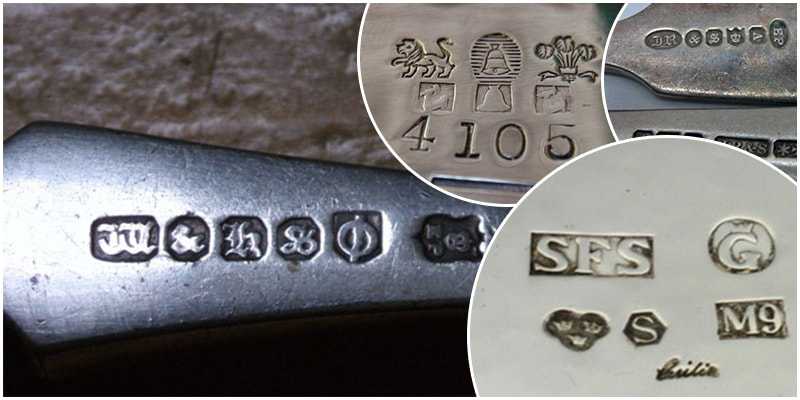
What makes these pieces especially desirable is their wide range of classic designs, which reflect different eras, artistic styles, and traditions. Often associated with elegance and formal dining, complete sets include forks, spoons, knives, and serving pieces created to complement one another. Today, collectors continue to value these designs for their beauty, historical significance, and long-term investment potential.
1. Grand Baroque by Wallace
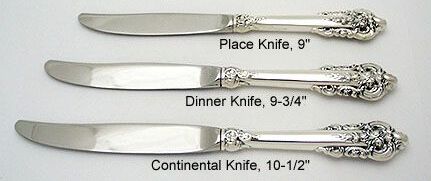
The Grande Baroque sterling silver flatware is a pattern that Wallace Silversmiths produces. The pattern was created explicitly by William S. Warren in 1941. Overall, it took Warren four years to develop and perfect this pattern, and he did so with the mission of the design being “to reflect the very essence of merriment and adventure, of artistic progress.”
When Warren first designed the pattern, he intended it only for flatware. Later, the collection expanded to include hollowware. As demand for the Grand Baroque pattern grew, the Golden Grande Baroque line was introduced to meet growing interest. Besides the traditional place settings in lunch, dinner, and continental size, there are over a hundred flatware pieces in the Grand Baroque pattern.
2. Repousse by Stieff
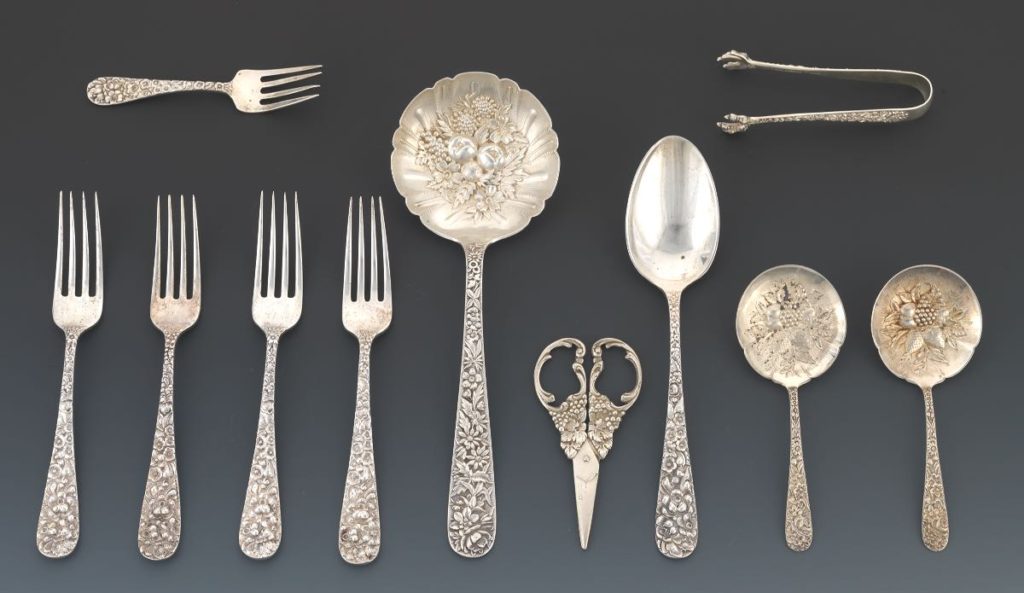
The Repoussé sterling silver flatware patterns by Stieff first appeared in 1845, while the Repoussé hollowware design dates back to 1828. This pattern stands out for its rich floral details that run along the entire stem and handle. Skilled silversmiths created its distinctive raised design by pressing the metal from the back, a technique known as repoussé. Inspired by traditional European silversmithing, this handcrafted process gives the pattern its timeless beauty and lasting value. A key trait in this pattern is that the Repousse sterling silver flatware patterns is flat on the opposite side. Collectors highly value Stieff’s Repousse flatware for its intricate pattern and the exceptional craftsmanship required to create each piece.
3. Francis 1st by Reed & Barton
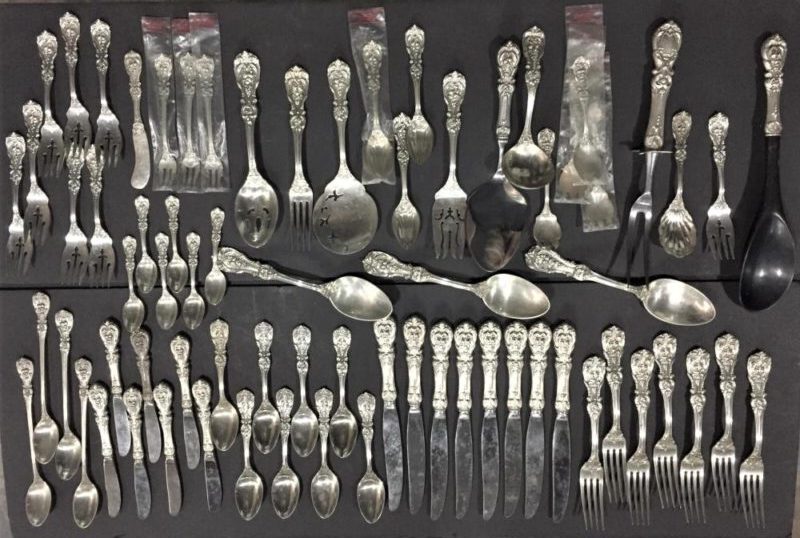
The Francis 1st by Reed & Barton flatware pattern is an American sterling silver tableware pattern introduced in 1906. Ernest Meyer, a French silversmith, designed the Francis 1st pattern. The pattern was named after King Francis I of France. Meyer aimed to create a pattern that surpassed the Renaissance-Baroque metalwork of Benvenuto Cellini. Cellini was a court artist and sculptor in the court of King Francis I, who ascended the French throne in 1515.
Identifying the Francis 1st pattern relies on the uniqueness of the design. Unlike many other flatware patterns, the Francis 1st pattern has fifteen different fruit-and-flower clusters, and each handle contains one of these detailed designs. Many claim that many tableware patterns of the Italian silver manufacturer Cesa 1882 inspired the design idea.
To identify the pattern, the original back stamp featured a lion, an eagle, and the letter “R.” Around 1950, a new back stamp that read “Reed and Barton” was used.
4. Eloquence Sterling by Lunt
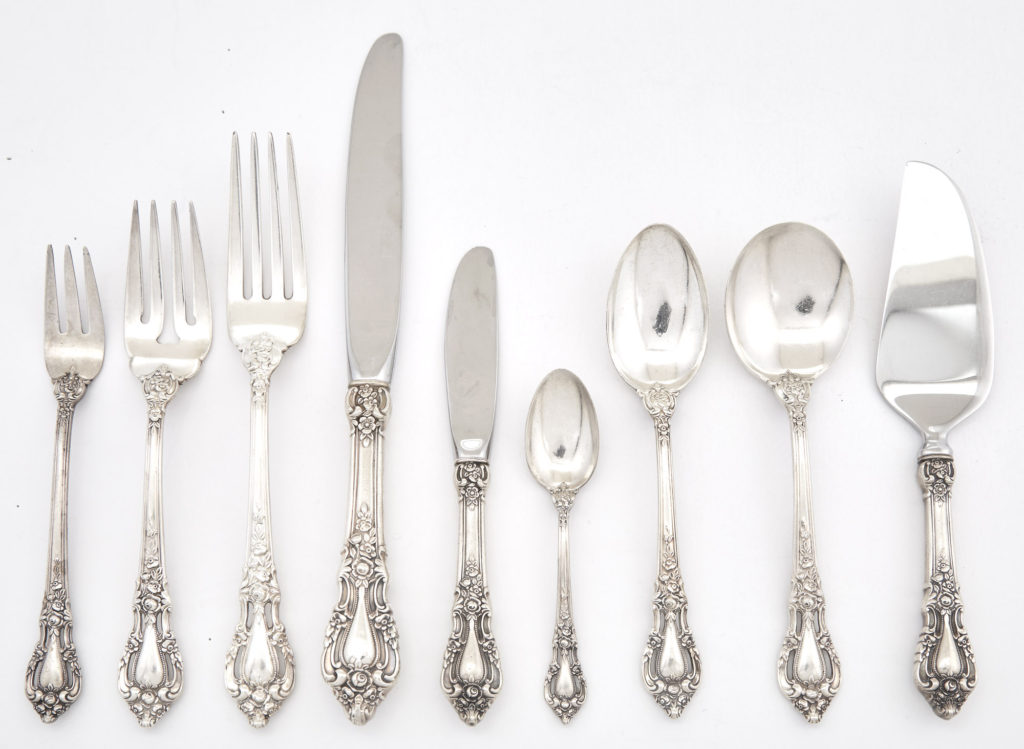
Lunt Silversmiths creates sterling silver with distinctive, elegant designs and has proudly carried this family heritage since the early 1900s in Greenfield, Massachusetts. Beyond the elegance, Lunt sterling silver has a variety of patterns over years of existence, all representing outstanding quality and craftsmanship, like their Eloquence sterling silver pattern. Eloquence debuted in 1953 and is considered a “flagship” pattern for Lunt. The pattern consists of wonderfully ornate handles pierced in four places, isolating the plain center and making it elegant.
Lunt and Bowlen Company took over A.F. Towle Co. in 1902, which had original sterling patterns dating back to 1883 that became a part of Lunt sterling flatware. In 1935, they changed their name to Lunt Silversmiths.
5. King Richard by Towle
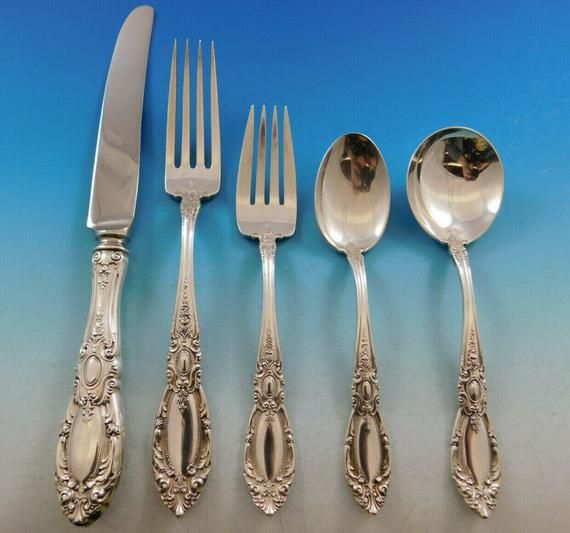
The King Richard pattern by Towle draws inspiration from the Crusades, featuring shield designs carried by knights. This rich, detailed style honors Richard the Lion-Hearted, one of the most famous Crusaders. Towle introduced the King Richard pattern in 1932 in sterling silver, originally crafted without monograms.
The sterling silver King Richard set consists of a pointed oval top and a richly ornamented shield in the center of the handle. The design of the handle takes so much time to be modeled that it is more profoundly and finely carved than any comparable pattern. King Richard’s design inspiration distinguishes it from other decorated, patterned silver sterling silver.
Final Thoughts
If you own any of the sets listed above, it’s important to know that complete sets of sterling silver flatware patterns usually bring higher value than incomplete ones, and extra serving pieces are always a plus. In addition, overall condition plays a major role in achieving the best price. Wear, damage, or heavy polishing can affect value, and monograms often reduce buyer interest.
With these factors in mind, as a leading Antique Buyer, we are happy to review any antiques you may have for appraisal and value. Our experienced team has extensive knowledge of antiques from around the world and regularly serves areas including Osprey, Englewood, and Ellenton. We buy antiques of all types and styles.
If you’d like to know the true value of your sterling silver flatware patterns or other antique items, bring them in for a professional appraisal. We’ll walk you through what you have and help you understand its market value with honesty and expertise.
Ready to find the true value of your sterling silver flatware patterns? Contact Sarasota Antique Buyers for a free, expert appraisal today.
Tags: antique silver flatware, antiques buyers online, who buys antiques
