

What Is Repoussé Silver? Discovering Hammered Metal
- Posted on 17th November 2026
- in Antique Collection, antique dealer, antique repoussé, Antique Silver, antiques
- by Alan
Silver has never been just a precious metal; it has been a canvas of human creativity and craftsmanship. Of all the methods for turning a flat sheet of silver into a three-dimensional work of art, none is more sculptural or more historically significant than repoussé.
If you have ever admired an antique silver pitcher covered in swirling floral motifs or a collectible spoon featuring an intricate landscape, you may already have encountered repoussé silver without realizing it.
Explores the ancient craft of metal repoussé, its history, its important role in American silversmithing—with particular attention to Baltimore silver repoussé—and practical considerations for collectors and heirs interested in identifying, caring for, and valuing these distinctive objects.
Repoussé has also played a role in major decorative-art movements, including Baroque, Rococo, and Art Nouveau. Understanding these artistic traditions helps place repoussé in a broader context: not merely as a metalworking technique, but as an artistic language passed down through generations of skilled craftspeople.
What Is Repoussé Silver? What Is the Technique?
At its heart, repoussé silver is defined by the way it is made.
The term comes from the French “repousser,” meaning “to push back.” In repoussé, the flexible sheet of metal is worked from behind. By striking the back of the metal with specialized tools, the artisan pushes sections of the material outward, creating a raised design in low or high relief on the front.
The decoration is therefore not simply applied to the surface. The relief is formed directly from the metal itself, giving the finished piece a sculptural quality that is inseparable from the object’s form.
Although this article focuses on silver, repoussé can also be executed in metals such as gold, copper, bronze, pewter, and other workable metal alloys.
Repoussé, Chasing, and Embossing: What’s the Difference?
The term “repoussé” is often used with chasing and is sometimes confused with embossing. When considering antique metalwork, it is important to know the difference.
Repoussé involves working the metal from the reverse side to raise the design outward.
Chasing is a complementary technique done from the front. Chasing tools sharpens outlines, creates texture, refines contours, and defines the relief produced through repoussé. The two techniques are frequently combined: repoussé adds volume; chasing smooths the surface.
Embossing generally involves pressing or stamping a design into metal, often with dies that allow a pattern to be reproduced repeatedly. Traditional hand repoussé, by contrast, is individually worked from the reverse and is often finished by chasing from the front.
Because hand-worked repoussé involves repeated interaction between the artisan, tools, and metal, individual pieces may display subtle variations that distinguish them from mechanically repeated designs.
How to Do Repoussé: A Step-by-Step Process
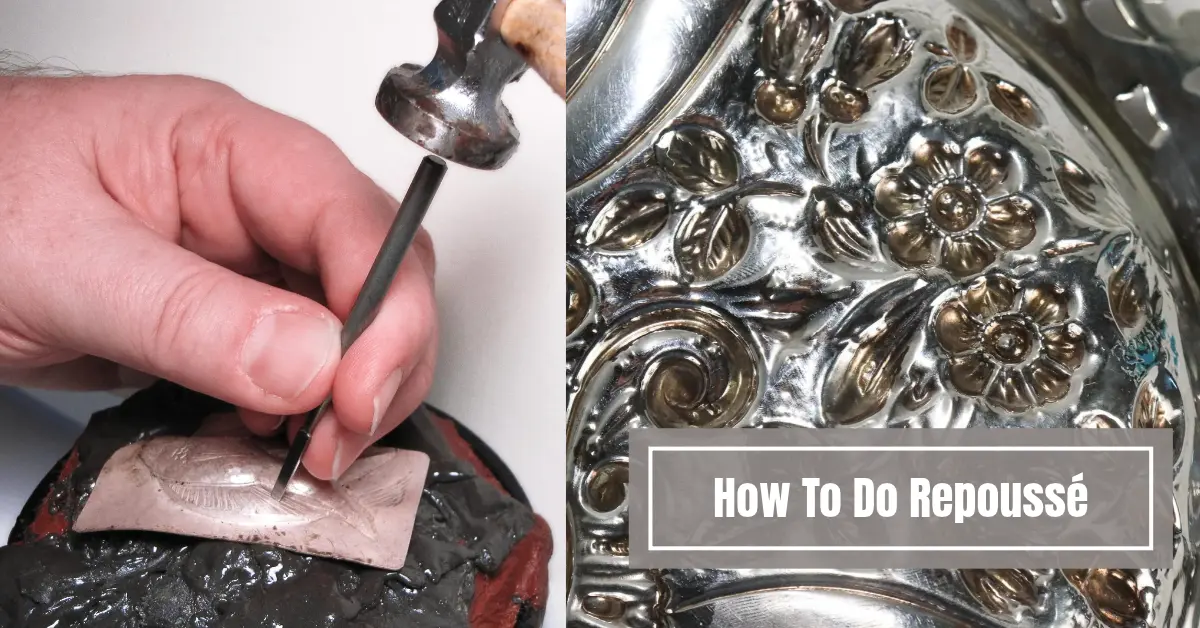
The repoussé technique can be seen as a conversation between the artist, the tools, and the metal.
The metal has traditionally been worked over a bed of pitch. Pitch is a resilient, tar-like material traditionally made from pine resin, waxes, clay, or other fillers. The pitch keeps the metal in place and absorbs the shock of the hammering. This allows the artisan to work one area without distorting the surrounding surface too much.
The process, in a simplified version, usually looks like this:
1. Transfer of Design
The pattern is either drawn or transferred to the metal sheet.
2. The Anchor
As needed, the metal is heated and clamped in a warmed pitch block, which holds it tightly but still allows some controlled movement while it is shaped.
3. Making the Relief Better
The craftsman works the back of the sheet with special tools, gradually pushing portions of it out to obtain the desired relief.
4. Annealing
Hammering silver repeatedly makes it less malleable because it work-hardens. So the metal has to be annealed periodically—carefully heated and allowed to soften—so that shaping can proceed without unnecessary cracking or stress.
5. Following the Details
Once the major relief is made, the piece is taken down, cleaned, and usually re-anchored face up. Then, from the front, chasing tools sharpen outlines, add texture, refine transitions, and give the design greater definition.
The finished repoussé work often reveals subtle evidence of the shaping process, leaving a visual record of the artisan’s craftsmanship and careful attention to detail.
A Journey Through Time: The History of Repoussé Art
Repoussé is an ancient metalworking craft. The technique was used by craftspeople in many cultures to decorate precious objects and larger works made of metals such as copper, bronze, gold, and silver.
Some of the earliest surviving examples are in ancient metalwork, including Greek armor decorated with relief figures worked over a supporting material.
Repoussé traveled across cultures and continents over time, each region adapting its motifs, functions, and aesthetic traditions.
Repoussé in the Americas
Pre-Columbian cultures fashioned gold and copper into ceremonial objects with raised decoration. Masks, chest ornaments, and other objects often displayed stylized animals, geometric patterns, and imagery related to mythology or ritual life.
Repoussé in Asia
In parts of Asia, repoussé was used to decorate religious and ceremonial objects, such as ritual vessels, temple decorations, and other sacred metalwork. Major decorative themes in many regional traditions were floral motifs, dragons, symbolic imagery, and narrative compositions.
Repoussé in Europe
Repoussé and chasing were especially important in European decorative metalwork of the 16th, 17th, and 18th centuries.
Baroque and Rococo silversmiths used the techniques to create dramatic high-relief ornamentation of foliage, shells, scrolls, figures, and elaborate narrative scenes.
In the later Art Nouveau period, metalworkers tried out more organic, flowing designs such as vines, flowers, insects, and other nature-inspired forms.
These changing motifs reflect how repoussé was adapted to different artistic traditions while maintaining the same underlying principle: transforming a flat metal surface into expressive relief through controlled handwork.
Monumental and Historic Examples of Repoussé
Repoussé is not limited to small decorative objects.
A monumental example often associated with this broader tradition of hammered sheet-metal construction is the Statue of Liberty. Its copper exterior was formed from sheets shaped over supporting forms and assembled into a monumental structure, demonstrating how related metal-forming principles can operate on an extraordinary scale.
Other historical examples cited in discussions of repoussé include ancient ceremonial vessels, religious metalwork, and elaborately decorated objects produced by European and Asian craftspeople.
Indian silversmiths of the 19th century also created highly detailed repoussé work, particularly in regions such as Lucknow and Kutch, where floral and foliate decoration became distinctive features of local metalworking traditions.
Together, such objects demonstrate the extraordinary versatility of hammered relief work, from intimate decorative pieces to ambitious architectural and ceremonial forms.
The Rise of Baltimore Silver Repoussé
Silversmith Samuel Kirk was a major force in the revival and helped popularize richly decorated repoussé silver during the 19th century.
Kirk and other Baltimore silversmiths adopted a distinctive decorative style characterized by dense surface ornamentation. Floral motifs, figures, landscapes, and other designs could cover much of an object’s visible surface, creating a particularly rich and textural effect.
This elaborate treatment became popularly known as Baltimore Repoussé or Baltimore-style silver.
The style became an important segment of American decorative arts and contributed to a greater appreciation of ornate silverwork in the United States. Today, examples made by important Baltimore craftsmen continue to receive special attention from collectors.
For collectors, the appeal of Baltimore repoussé lies not only in the silver itself but also in the combination of craftsmanship, historical context, maker, pattern, condition, and decorative complexity.
Repoussé in the Collector’s World: Identifying, Valuing, and Caring for Silver
For people who collect or inherit repoussé silver, three questions commonly arise:
Is the piece genuinely handworked?
What might it be worth?
How should it be cared for?
Each question requires careful examination rather than reliance on a single feature.
Identifying Authentic Repoussé Silver
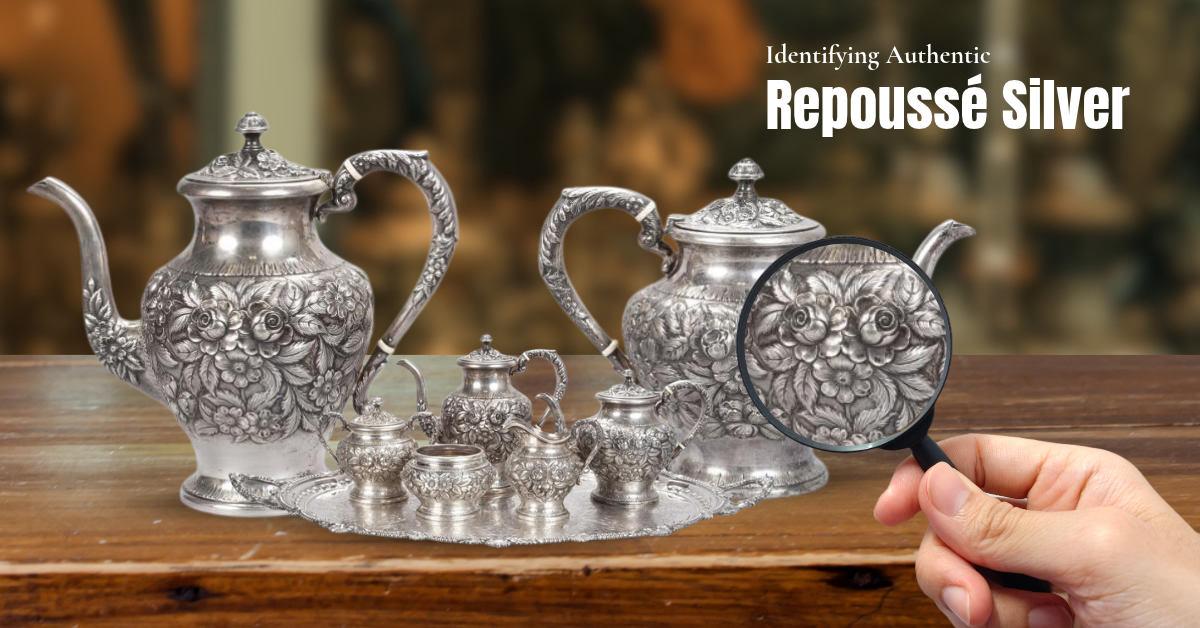
The markings, patterns, construction methods, and styles on antique repoussé objects vary widely by maker, period, region, and intended use.
Traditional hand-worked repoussé may show subtle irregularities and evidence of individual craftsmanship that mechanically repeated decoration often lacks.
When examining a piece, look for maker’s marks, silver-content marks, and other identifying stamps. On American silver, these may appear on the underside, base, rim, handle, or another inconspicuous area.
Baltimore silver associated with the Kirk firm, for example, may carry versions of the company name or silver-purity markings.
Visual examination can also provide useful clues. Hand-worked leaves, flowers, figures, and other decorative elements may show small variations in depth, contour, and texture rather than absolute mechanical uniformity.
By contrast, mechanically produced decoration may appear extremely regular, with identical repeating motifs or evidence of manufacturing processes.
However, no single characteristic proves authenticity. A missing maker’s mark does not automatically mean a piece is inauthentic, and a “silver plate” mark can still indicate hand-finishing techniques in decorative work. Such features provide additional evidence that must be interpreted in context.
Silver Repoussé Authentication Checklist
When viewing a piece, ask yourself:
- Look for any visible maker’s marks, sterling marks, or other indications of silver content.
- Check the bottom, base, rim, and other less obvious spots for identification.
- Look for slight signs of handwork, such as variation in texture or relief.
- Ensure repeating ornaments are identical or show natural variation.
- Look at the overall construction and see if the relief looks integral to the metal.
- Verify documentation/presence.
- Try to research the maker, the pattern, and similar authenticated examples if you can.
This checklist can help you obtain a first impression, but a competent specialist should assess any potentially valuable or historically significant object.
The value of repoussé silver is influenced by several interconnected factors. Various interconnected factors determine the worth of a repoussé silver item.
Quality and Depth of Relief
One of the most important considerations is the quality of the artistry. Well-defined relief, sophisticated chasing, balanced composition, and skillful handling of detail can greatly affect desirability.
Maker and Scarcity
Pieces by recognized silversmiths or historically important firms may command a premium, especially if the design, form, or pattern is unusual.
Condition
Condition can have a major effect on value.
Excessive polishing may soften sharp chasing, flatten high points, and gradually diminish fine decorative detail. Dents, cracks, repairs, replaced components, and other alterations may also affect both appearance and market value.
Silver Content
The intrinsic value of the metal provides one component of an object’s worth. However, in important antique silver, craftsmanship, maker, rarity, condition, history, and artistic merit may contribute substantially more than the metal’s melt value.
Provenance
Documented ownership history can enhance a piece’s historical interest, particularly if it can be linked to a notable person, family, institution, event, or collection.
Understanding Different Types of Value
Collectors and heirs should also remember that “value” can mean different things depending on the appraisal’s purpose.
An object’s auction value may differ from its retail replacement value, insurance value, private-sale value, dealer purchase price, or melt value.
For this reason, the purpose of an appraisal should be clearly established before relying on a valuation figure.
Researching Repoussé Silver Before an Appraisal
Before consulting a professional, owners can do preliminary research by comparing their object with similar pieces that have appeared at established auctions or specialist marketplaces.
Some useful points of comparison:
- manufacturer;
- estimated date;
- design or decoration;
- dimensions;
- weight;
- quantity of silver;
- state;
- origin; and
- actual selling prices.
When researching auction records, realized prices are usually more informative than estimates alone, since they show what buyers actually paid at a given sale.
While these comparisons are not definitive, they can help owners set more realistic expectations before they see a professional.
Find an appraiser who has the proper training and credentials and direct experience with antique silver or decorative metalwork. Membership in professional appraisal organizations may also provide useful context for evaluating qualifications.
A reputable appraiser should be able to explain the valuation basis and the type of value being determined.
The Delicate Art of Caring for Repoussé Silver
Repoussé silver generally requires more careful cleaning than a plain silver surface.
Its deep recesses can trap dirt and polishing residue, while repeated abrasive polishing may gradually wear down the highest points of the design.
For that reason, conservation should focus on preserving detail rather than maintaining a constantly bright, mirror-like finish.
Routine Cleaning
For appropriate objects, gentle washing with warm water and a mild, non-abrasive, phosphate-free detergent can help remove ordinary surface dirt. Avoid prolonged soaking.
Cleaning Recessed Areas
A very soft brush or appropriate soft sponge can help lift dirt from recessed portions of the decoration. Use gentle pressure, particularly around fragile or sharply defined details.
Rinsing and Drying
Rinse thoroughly and dry the piece promptly with a soft, clean cloth. Moisture left in deep crevices can contribute to spotting or other problems.
Tarnish and Polishing
Avoid aggressive silver dips, harsh chemicals, and abrasive polishing compounds unless their suitability for the specific object has been established.
Heavy polishing can remove surface material over time and may soften fine chasing or high-relief details.
Some collectors also prefer to preserve a degree of natural or intentional oxidation in recessed areas because it enhances visual contrast and gives the design greater depth.
For light tarnish, minimal treatment is generally preferable to repeated heavy polishing.
Storage
Proper storage can reduce future cleaning.
Silver should be stored in a dry, stable environment and may benefit from tarnish-inhibiting storage materials designed especially for silver objects.
The basic principle is simple: the safest approach is usually the least aggressive treatment that is needed.
Expert Conservation and Restoration
When working with valuable or historically significant silver, restoration should be approached with care.
Some dents, structural damage, or surface issues can be addressed by skilled conservators or specialist silversmiths. But lost original detail is not always restorable without extensive work.
Market value and historical integrity can both be affected by substituting blurry patterns or heavily worn relief, which can change the original surface.
For significant items, consult a qualified conservator or specialist before doing any major repair, reshaping, or refinishing.
If the piece is later offered for sale, any major restoration should also be disclosed to potential buyers.
Selling Repoussé Silver
Owners considering a sale should first determine what type of object they have.
A common silver-plated decorative piece may suit a broad online marketplace. At the same time, a rare 19th-century object by a recognized maker may warrant evaluation by a specialist auction house or antique-silver dealer.
Possible selling channels include:
- specialist auction houses;
- established antiques dealers;
- decorative arts specialists;
- curated online marketplaces;
- broader online auction platforms; and
- direct private sales.
The best place depends on the maker, rarity, condition, quality, provenance, and the expected value of the piece.
Major auction firms and specialist marketplaces may be appropriate for higher-quality objects. At the same time, more general online platforms can give pieces of more modest value access to a larger audience.
Repoussé Silver and the Florida Market
Florida residents who inherit or collect antique silver may have access to both local and national selling channels.
Before choosing a venue, consider obtaining an independent assessment of the object’s maker, age, condition, silver content, and likely market category. This can help determine whether the piece is
best handled through a local specialist, a regional estate auction, a national auction house, or an online marketplace.
For potentially significant objects, choosing a seller or auctioneer with demonstrated experience in antique silver matters more than simply choosing the platform with the largest audience.
The goal should be to get the piece in front of buyers who appreciate its craftsmanship and its history.
Conclusion: The Long Shadow of Repoussé
Repoussé silver is much more than decorative metalwork. Each piece is worked by hand, a physical dialogue between the artisan, their tools, and the metal itself.
Repoussé has long been a way for metalworkers to turn flat sheets of metal into expressive sculptural surfaces, from ancient ceremonial objects to elaborately decorated 19th-century Baltimore silver.
This tradition continues today in the work of contemporary jewelers, silversmiths, sculptors, and decorative artists who combine age-old techniques with modern forms and personal styles.
Learning about repoussé is a good way for collectors, heirs, and admirers of fine craftsmanship to look beyond an object’s silver content. It shows the skill, time, design, history, and human labor that are preserved in every surface that has been carefully raised and chased.
Whether you have a single repoussé spoon or an entire set, you should not think of these pieces as silver by weight but as lasting examples of craftsmanship and decorative art.
Tags: Repoussé Silver
